There are no items in your cart
Add More
Add More
| Item Details | Price | ||
|---|---|---|---|

{{DATE}}
Artificial Intelligence (AI) is no longer a future concept, it is a current reality of how businesses connect with consumers. As companies shift to data-interaction and personal experiences, the deeds are finding out that traditional approaches are not sufficient. This is the place where it becomes necessary to make an AI marketing strategy. In this guide, we will break a simple, effective and full step-by-step method to help create our AI-powered marketing roadmap from above the ground.
AI marketing refers to the structured implementation of artificial intelligence technologies such as marketing strategy, machine learning, natural language processing and predictive analytics. This includes customer data analysis, material privatization, automatic communication and real -time campaign adaptation.
The Goal is Simple: to improve marketing efficiency, increase ROI and increase customer experience.
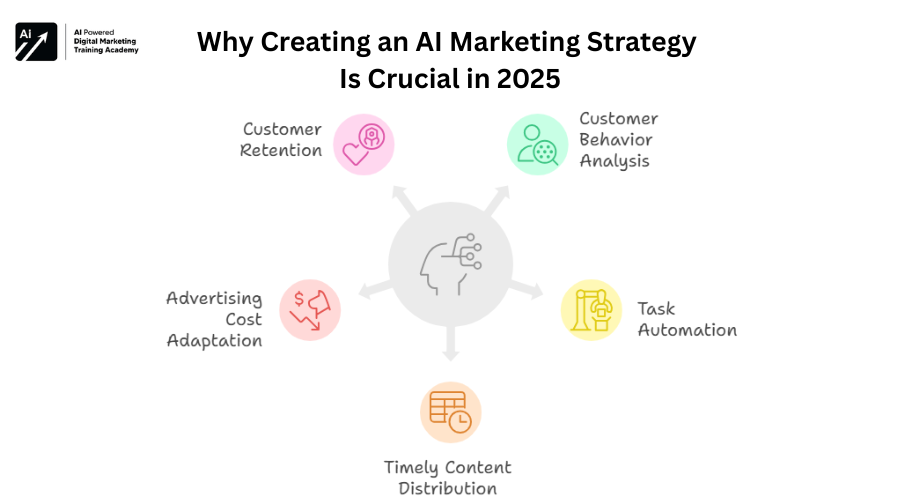
In the age of personalization and automation, only relying on traditional marketing methods damages your brand. Consumers expect real-time reactions, hyper-personalized content and uninterrupted digital experiences.
By creating an AI marketing strategy, reaching out to the devices:
AI equipment can automate time -taking tasks such as customer division, social media posting, and email targeting, allowing teams to focus on strategy and innovation.
AI uses historical and real -time data to personalize materials, offers and communications for individual users, improves engagement and conversion rates.
Through the future analytics, the AI helps the marketing to make data-supported decisions where to allocate the budget and how to tailor the campaign for the highest ROI.
AI-Powered chatbots and recommended engines create spontaneous interactions, enhancing customers' satisfaction and brand loyalty.
Creating an AI marketing strategy requires thoughtful planning, execution, and optimization. Follow these steps to get started:
Start by identifying your primary goals. Do you want to increase the website traffic? Improve lead generation? Increase customer service?
Your objectives will guide that AI tools and approaches are best suited for your business.
Tip: Aligns your goals with major performance indicators (KPI) such as CPA, Customer Lifetime Value (CLV), or email with open rates.
AI depends on quality data. Conduct your audit:
Ensure that the data is clean, organized and accessible. It is an AI marketing strategy foundation that works.
Different platforms offer AI features depending on your needs:
Apply AI where it distributes the most value:
Display track through dashboard and analytics. Note on:
Remember: AI learns and develops. So should you have a marketing plan?
AI is not a magic button. Take the time to test, analyze, and improve implementation.
Without defined outcomes, AI efforts can become disjointed and ineffective.
AI augments human creativity it doesn't replace it. Human oversight ensures ethical and effective communication.
Sephora uses AI to recommend products based on skin types, previous purchases and user behavior. It runs high engagement and conversion.
Netflix's AI show analyzes habits to see habits to recommend and personalize thumbnails, increasing the clock time.
Using AI and mobile data, Starbucks sends individual offers based on history and day time, improving the results of the loyalty program. These brands succeeded by making an AI marketing strategy to suit their audience and operating capabilities.
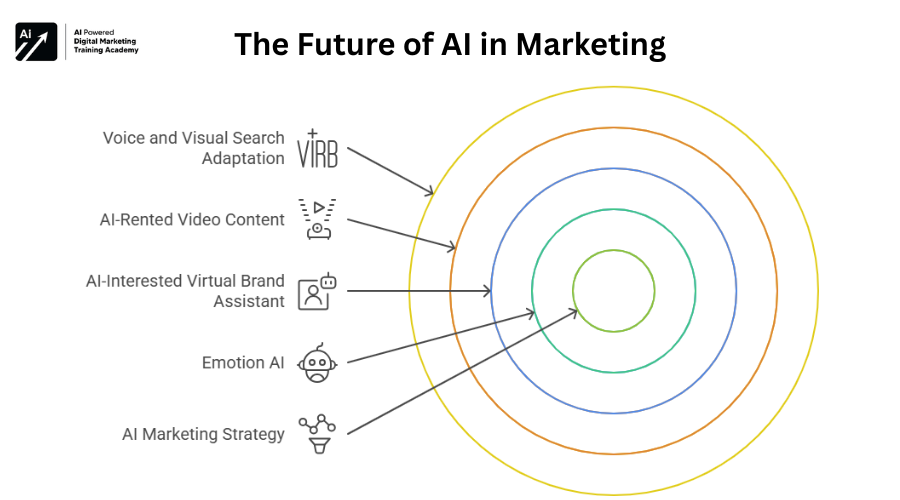
AI will soon be built in every stage of the customer travel from awareness to advocacy. The upcoming trends include:
Today, Marketers, who master the Creating an AI marketing strategy, will be the leader of tomorrow.
You do not need to be a technical specialist to start with AI in marketing. Start with clear goals, choose the right tool, and focus on the average results. Whether it is automated to the email, improving advertising performance, or personalizing user experiences, AI can lead to significant results. With this step-by-step approach, making an AI marketing strategy not only becomes able to achieve, but is essential for 2025 and further development.
{{AUTHOR}}
Digital Marketer | SEO, Social Media & AI-Powered Strategies | Helping Brands Grow with Data-Driven Marketing..