There are no items in your cart
Add More
Add More
| Item Details | Price | ||
|---|---|---|---|

Discover how AI is transforming digital marketing with smarter ads, personalized content, and predictive analytics. The future of marketing is AI-powered.
{{DATE}}
Where the taste bud is new every day and web portals shift every day, marketing teams need tools that are not only intelligent but bright as well. That is where Artificial Intelligence (AI) comes in. From saving time on routine work to delving into ginormous data sets and forecasting, AI has emerged as the game-changer.If you were wondering how AI is transforming digital marketing, this manual informs you in straightforward, simple-to-understand terms, no technical speak, just practical tips that matter.
Artificial Intelligence, in simple terms, is the capacity of machines to mimic human smartness. On the web, this translates to using AI to study information and determine user behavior, customize content, automating campaigns, etc.Such traditional marketing techniques involve lots of guesswork what do consumers click on? When is one supposed to post? Which email subject lines will perform best? AI eliminates all guesswork since it gives marketers data-driven solutions.
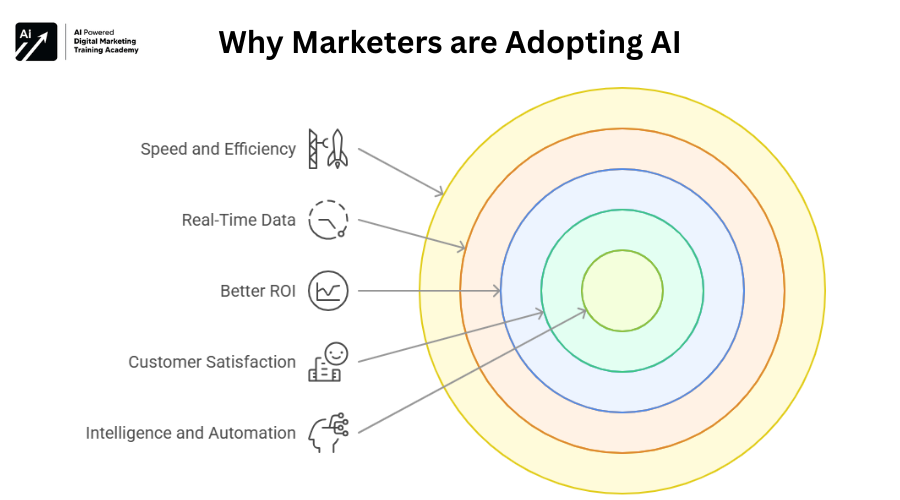
There are quite a number of reasons why online marketers are shifting towards AI-enabled solutions:
One of the most obvious ways that AI is reshaping marketing is in personalization. Instead of saying hello to all comers with the same message or offer, AI looks at individual behaviors like browsing history, clicks, and past purchases and tailors in real-time.
When you shop on Amazon, your home page is tailored to your previous searches and purchases. That's AI working. Netflix also recommends shows based on what you've watched.AI enables businesses to engage customers as human beings, not as data points. This raises engagement, boosts time on site, and fuels higher conversion rates.
The biggest challenge, perhaps, for marketers is to come up with relevant content on a consistent basis. AI tools now assist in the development of content by suggesting blog ideas, writing initial drafts, and optimizing text for SEO.
They will not reduce the creativity of humans but enhance it. Marketers and writers can use AI to generate ideas faster, fix grammar mistakes, reword sentences, and even translate into different languages.
For example, an AI such as Jasper or ChatGPT can generate captions or blog structures in seconds. This allows teams to focus more on strategy and creativity, less on the drudge of writing.
In some sense, one super good example of how AI is transforming digital marketing is the manner in which it's intelligentizing, speeding up, and multiplying content.
Those are the days when customers used to wait hours, sometimes days to get a response. Chatbots fueled by AI can answer queries 24/7, guide users through your site, and even sell.
Chatbots are not limited to basic answers. With natural language processing, they can understand tone, intent, and even emotion. Some are even programmed to transfer complex issues to a human agent when necessary.
Businesses are increasingly leveraging chatbots on websites, mobile applications, and social media to continue the conversation.
This is an excellent example of AI transforming digital marketing by way of improved real-time conversations and customer service.
Imagine having the ability to know what a customer is going to want before they even know it themselves. That is what predictive analytics does. From viewing historical customer behavior, AI can forecast what they are going to do in the future what they are going to buy, for example, or when they are going to churn.
This data-driven foresight allows marketers to
Online advertising is expensive, and no company desires to invest budget on non-converting advertisements. AI optimizes advertising through:
Email marketing remains an incredibly potent tool but only if you use it correctly. AI is helping companies to deliver better open rates and conversions by:
Social media platforms are overflowing with information. likes, shares, comments, trends. AI can go through all that in the moment and help brands:
While the benefits are massive, AI adoption is not without challenges:
Because AI relies so heavily on data, there are concerns about the acquisition, storage, and utilization of the data. Companies must strictly follow legislation like GDPR to ensure privacy of the users.
AI is smart, not emotional. Some customer situations still require human imagination and empathy. The balance between automation and human interaction is the solution.
AI technologies will require investment and training. Small businesses will at first be intimidated by the learning curve or expense.
Despite this, the long-term advantages of AI in marketing are unmistakable. Businesses that harness it responsibly will stay one step ahead of the competition.
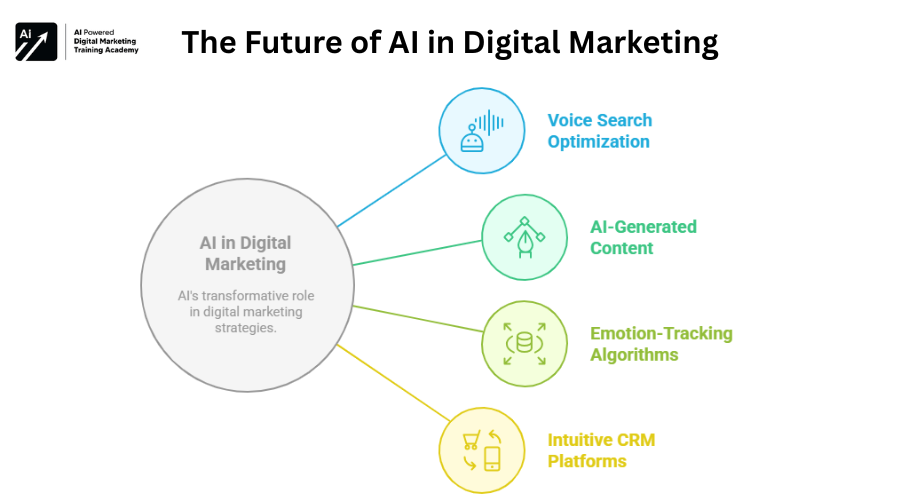
In the coming years, AI is only going to get more advanced and accessible. We can expect:
Artificial Intelligence is not rendering marketers obsolete it's making them more effective. From more intelligent ads and more personalized content to chatbots and analytics, AI is transforming the way brands interact with their audiences.
To summarize, here's how AI is transforming digital marketing:

{{AUTHOR}}
A California-based travel writer, lover of food, oceans, and nature.